
Coming soon
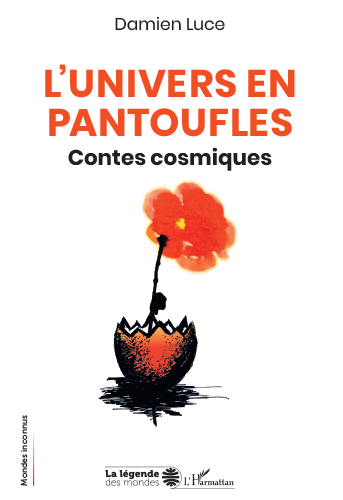
2026 – Harmattan / La légende des maondes
This book is a whimsical interstellar odyssey.
The author travels the universe in search of unusual worlds, encountering intriguing and colorful characters along the way.
The text explores universal themes: solitude, curiosity, memory, courage, friendship, the search for meaning… An invitation to explore our inner galaxies and rediscover, in the far reaches of space, our childhood stars. The ink illustrations, created by the author, offer a graphic universe that is both simple and zany.
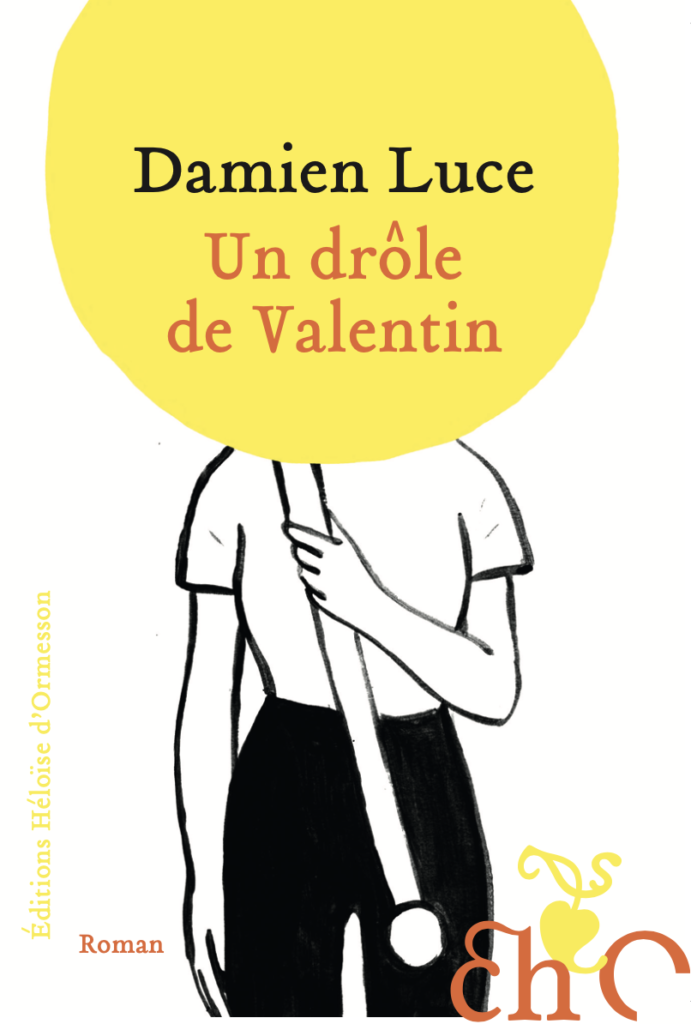
2022 – Editions Héloïse d’Ormesson
They are four self-proclaimed nonconformist friends. There’s Blanche, the romantic cop; Capucine, the shy bookworm; Suzanne, the deadpan psychologist; and Laura, the pragmatic Argentinian with a sharp tongue. Their close bond is tested by death: Blanche cannot bear to part with the body of her deceased love. Once they overcome the shock, the quartet grows even closer and finds support from a tango-dancing bell founder and an enigmatic, taciturn man. Together, they will trample prejudices and reinvent the meaning of love.
À travers cet adieu qui réunit des cœurs meurtris, on découvre l’intensité d’un pas de deux, les ravages d’une relation toxique, la peur de la séparation et, surtout, la puissance du partage.
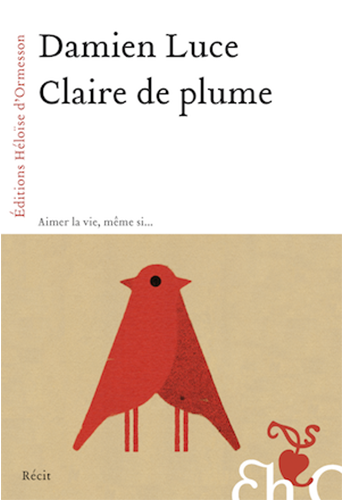
Folire Prize 2018
2017 – Editions Héloïse d’Ormesson
“This book is a bit like my sister Claire’s book. A little girl born with six fingers on each hand who, according to the doctors, only had a few weeks to live. And yet Claire, carried by the hearts of her family, despite the quirks of her chromosomes, grows up, learns to read, to write, to assert herself.
This text evokes the daily life of a family who experienced the challenges of disability firsthand. To do so, I tried to absorb Claire’s perspective, to the point of making it my own. For the duration of this book, I wanted to become Claire through writing.

2015 – Editions Héloïse d’Ormesson
Spring 1918. Claude-Emma Debussy, affectionately nicknamed Chouchou, confides in her diary. Casting a tender gaze upon the world, she recounts her daily life in a time marked by war. In homage to her deceased father, she promises herself to decipher a piece of music on the piano each week. Far from the scales imposed upon her, she writes, with poetry and candor, the music of her life. *The Daughter of Debussy* draws us into the romantic world of a young girl unlike any other, who was the joy of a composer of genius.
“The reader cannot help but be moved by this forgotten creature, brought back to life by the magic of literature thanks to Damien Luce, a poetic tightrope walker whose book rings true and beautiful.” (Livre Hebdo)

2012 – Editions Héloïse d’Ormesson
A whimsical immersion into the artistic life of the Belle Époque, where Guillaume Apollinaire, Sarah Bernhardt and Jean Cocteau rubbed shoulders, Cyrano de Boudou creates a poetic, sometimes melancholic universe.
“Cyrano de Boudou” is a beautiful novel of love and coming-of-age. One could say that, in a way, it’s a bit like Rostand’s “Le Grand Meaulnes.” This speaks volumes about the literary quality and richness of content in this atypical “Cyrano with a red nose,” a work of powerful imagery that leaves a lasting impression on the reader. (La Voix du Luxembourg)
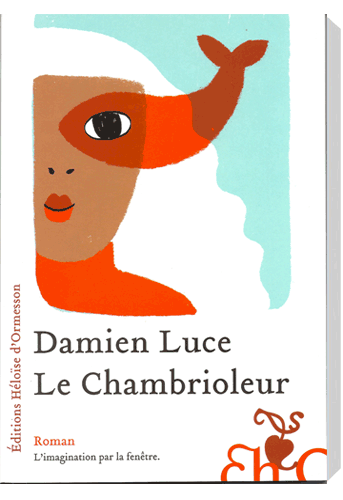
2010 – Editions Héloïse d’Ormesson
Raised by forgetful parents, mocked by merciless classmates, Jeanne invents a daily life tailored to her own needs, where the walls are movie screens, where reality and fiction encroach upon each other.
“A tender and richly detailed tale.” (Le Monde des livres)

